




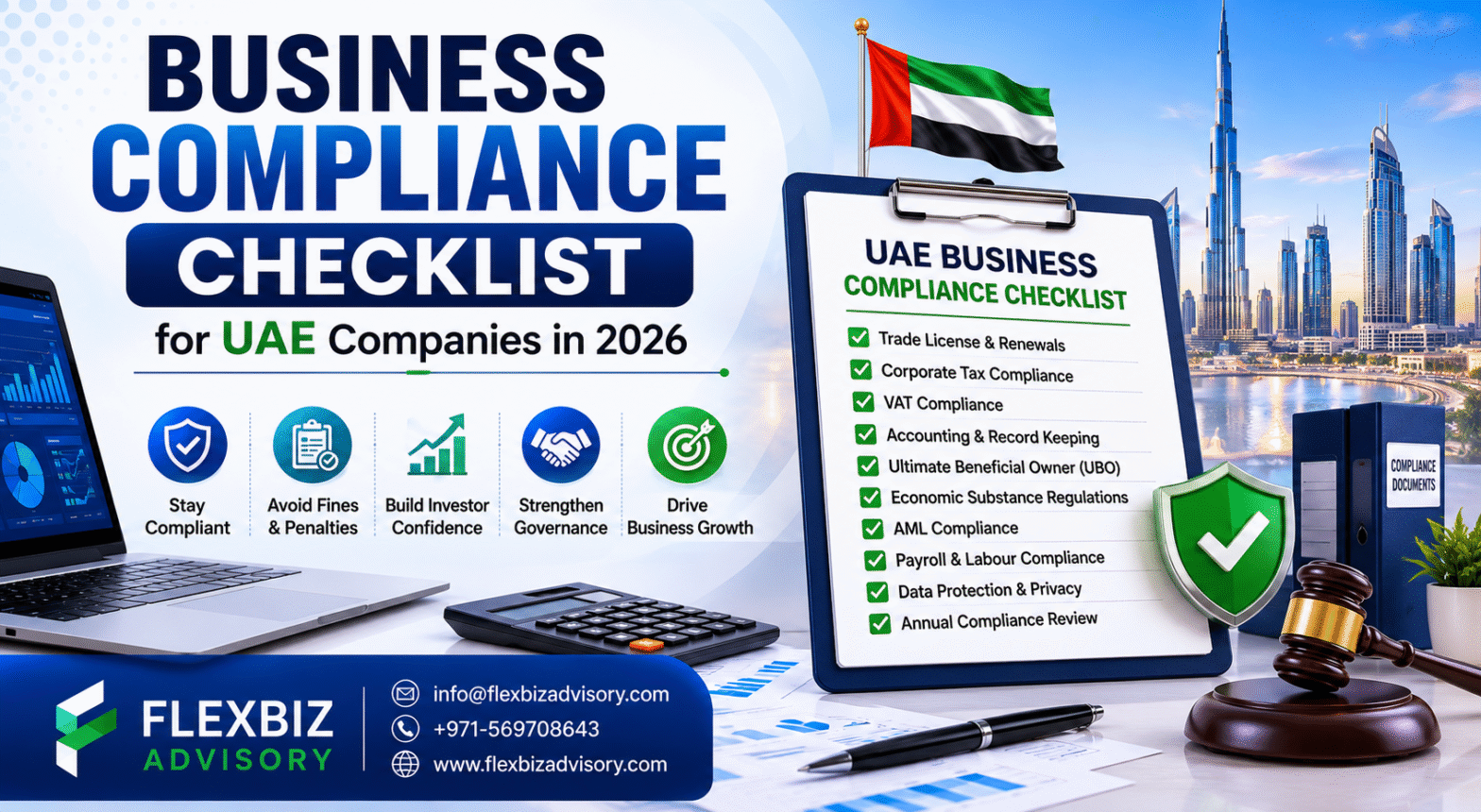
The United Arab Emirates continues to be one of the world’s most attractive business destinations. However, with the introduction of Corporate Tax, evolving VAT regulations, and increasing regulatory requirements, maintaining compliance has become more important than ever.
Failure to comply with UAE regulations can result in penalties, legal complications, and reputational damage. Whether you operate a startup, SME, or multinational company, understanding compliance obligations is essential for sustainable business growth.
This comprehensive guide outlines the key compliance requirements UAE businesses should follow in 2026.
Why Business Compliance Matters
Compliance is more than simply following regulations. It helps businesses:
- Avoid penalties and fines
- Build investor confidence
- Improve operational transparency
- Strengthen corporate governance
- Enhance business reputation
- Support long-term growth
Companies that proactively manage compliance often experience fewer disruptions and better financial performance.
1. Maintain a Valid Trade License
Every business operating in the UAE must hold a valid trade license issued by the relevant authority.
Important Actions
- Renew licenses before expiration
- Verify business activities remain accurate
- Update company information when changes occur
- Maintain required approvals and permits
Risks of Non-Compliance
Failure to renew licenses can lead to:
- Financial penalties
- Suspension of activities
- Banking complications
- Visa processing issues
2. Corporate Tax Compliance
Corporate Tax is now a major compliance requirement for UAE businesses.
Key Requirements
Businesses should:
- Register for Corporate Tax
- Maintain proper accounting records
- File tax returns on time
- Calculate taxable income accurately
- Retain supporting documentation
Best Practices
Maintain:
- Revenue records
- Expense documentation
- Bank statements
- Contracts and agreements
- Financial reports
Professional advisory support can help businesses minimize risks and maintain compliance.
3. VAT Compliance
Value Added Tax (VAT) remains a critical area of compliance.
Businesses Must
- Register when applicable
- File VAT returns accurately
- Maintain tax invoices
- Track input and output VAT
- Retain records for required periods
Common VAT Mistakes
- Incorrect tax calculations
- Late return submissions
- Missing invoices
- Poor record management
Regular reviews help reduce compliance risks.
4. Maintain Proper Accounting Records
Accounting records form the foundation of regulatory compliance.
Required Records
Companies should maintain:
- General ledgers
- Financial statements
- Payroll records
- Bank reconciliations
- Invoices and receipts
Benefits
Proper accounting provides:
- Better decision-making
- Improved cash flow visibility
- Easier audits
- Accurate tax reporting
5. Ultimate Beneficial Owner (UBO) Compliance
The UAE requires businesses to identify and report Ultimate Beneficial Owners.
UBO Requirements
Companies must:
- Maintain UBO registers
- Update ownership information
- Submit required disclosures
- Retain supporting documents
Why It Matters
UBO regulations support:
- Transparency
- Anti-money laundering efforts
- Corporate governance
6. Economic Substance Compliance
Some businesses may still have Economic Substance obligations depending on their activities.
Relevant Activities May Include
- Holding companies
- Finance businesses
- Distribution activities
- Intellectual property activities
Compliance Measures
Businesses should:
- Review applicability
- Maintain supporting records
- Submit required notifications
Professional review is recommended annually.
7. Anti-Money Laundering (AML) Compliance
AML regulations continue to play a major role in UAE business operations.
Businesses Should
- Conduct customer due diligence
- Verify client identities
- Monitor suspicious activities
- Maintain AML records
- Train employees regularly
Benefits
Strong AML programs protect businesses from:
- Regulatory penalties
- Financial crime risks
- Reputational damage
8. Payroll and Employment Compliance
Employers must comply with UAE labor laws and employee regulations.
Key Areas
- Employment contracts
- Wage Protection System (WPS)
- End-of-service benefits
- Leave management
- Employee records
Best Practices
Conduct regular HR audits to ensure compliance.
9. Data Protection and Privacy Compliance
Data privacy requirements are becoming increasingly important.
Businesses Should
- Protect customer information
- Implement cybersecurity measures
- Restrict unauthorized access
- Maintain privacy policies
Compliance Benefits
- Increased customer trust
- Reduced security risks
- Improved business reputation
10. Annual Financial Review
Regular financial reviews help identify compliance gaps before they become serious problems.
Review Areas
- Financial statements
- Tax filings
- VAT returns
- Payroll records
- Internal controls
Advantages
Businesses gain:
- Better financial visibility
- Early issue detection
- Improved risk management
Common Compliance Challenges for UAE Businesses
Many companies struggle with:
Regulatory Changes
Laws and regulations evolve regularly.
Resource Constraints
Small businesses often lack dedicated compliance teams.
Documentation Issues
Incomplete records increase audit risks.
Tax Complexity
Corporate tax and VAT obligations require specialized expertise.
How Professional Compliance Services Help
Business compliance advisors assist with:
Compliance Reviews
Identify risks and weaknesses.
Tax Advisory
Support corporate tax and VAT compliance.
Accounting Services
Maintain accurate financial records.
Regulatory Updates
Keep businesses informed of changing requirements.
Risk Management
Reduce exposure to penalties and operational disruptions.
UAE Compliance Checklist Summary
Before the end of each financial year, businesses should verify:
✅ Trade license renewal completed
✅ Corporate tax registration maintained
✅ VAT returns submitted
✅ Accounting records updated
✅ UBO records maintained
✅ AML requirements satisfied
✅ Payroll compliance reviewed
✅ Employee records updated
✅ Data protection measures implemented
✅ Annual compliance review completed
Frequently Asked Questions
What happens if a UAE company fails to comply?
Non-compliance may result in penalties, fines, restrictions, and regulatory investigations.
Is Corporate Tax mandatory in UAE?
Eligible businesses must comply with UAE Corporate Tax regulations and filing requirements.
How long should financial records be retained?
Businesses should maintain records according to applicable UAE regulations and tax requirements.
Why should businesses use compliance consultants?
Compliance consultants help reduce risks, improve efficiency, and ensure regulatory requirements are met accurately.
Conclusion
Business compliance is no longer a simple administrative function. In 2026, UAE companies must manage corporate tax, VAT, AML, UBO, payroll, and financial reporting requirements effectively to remain competitive and compliant.
A proactive compliance strategy helps businesses avoid penalties, strengthen governance, and focus on growth opportunities with confidence.
Need Expert Compliance Support?
FlexBiz Advisory
📧 Email: info@flexbizadvisory.com
📞 Phone: +971-569708643
🌐 Website: https://flexbizadvisory.com/