




For growing businesses, keeping a healthy cash flow is often harder than making money. Rapid growth brings higher expenses, longer times to collect payments, and increased inventory needs. This is where good working capital management is essential. It makes sure a business has enough cash to cover short-term needs while still investing in growth opportunities.
In this blog, we’ll look at practical and proven working capital management strategies that can help growing businesses stay financially stable and scalable.
Working Capital Meaning
Working capital is the difference between a company’s current assets and current liabilities; It shows the short-term financial health of a business and its ability to pay for its day to day operations.
Working Capital Meaning
Working capital is the difference between a company’s current assets and current liabilities; It shows the short-term financial health of a business and its ability to pay for its day to day operations.
The significance of managing working capital
For growing companies, poor working capital management can result in:
• Cash flow shortfalls
• Overdue payments to suppliers
• Limited ability to invest in growth
• Increased debt reliance
Effective management, however, guarantees:
• Easy day to day operations
• Improved supplier relations
• Better profitability
• Robust financials
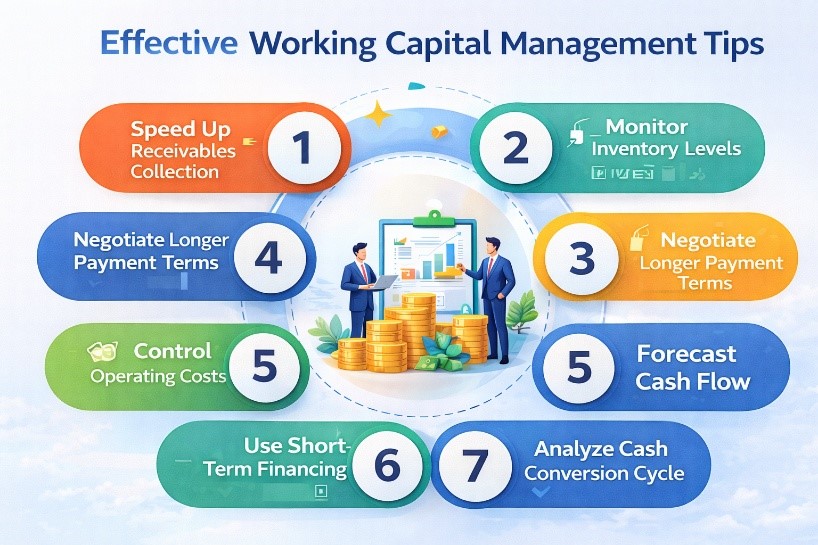
Important Strategies for Working Capital Management
1. Simplify accounts receivable
Late customer payments can really hurt your cash flow.
Tactics:
• Provide early payment discounts
• Communicate clear credit policies
• Timely invoices and reminders
• Employ automated invoicing systems
Faster collections mean more liquidity to reinvest in the business.”
2. Improve Inventory Management
Excess inventory ties up cash, and low inventory can lead to lost sales.
Best Practice:
• Utilise inventory management software
• Adopt Just-In-Time (JIT) inventory
• Regularly review demand patterns
• Clear slow moving stock
Managing inventory levels is critical to freeing up working capital.
3. Negotiating supplier payment terms
Improving cash flow by extending your payables cycle without damaging relationships.
Tips:
•Request additional time to pay
• Establish strong supplier relationships
• Use trade credit
That gives you the ability to hold cash longer and still be in business.
________________________________________
4. Control Operating Expenses
With growth, many businesses face a rapid increase in expenses.
Action Points:
– Conduct regular expense audits
– Cut unnecessary costs
– Outsource non-core activities
– Use technology to improve efficiency
Cost control improves working capital.
________________________________________
5. Enhance Cash Flow Forecasting
Good forecasting helps businesses plan ahead and prepare for shortages.
How to:
• Review cash flow trends in historical
• Use financial planning tools
• Expect seasonality
• Foster cash reserve Forecasting mitigates uncertainty and enhances decision-making.
Visit us info@flexbizadvisory.com mob +971-569708643
6. Use Short Term Financing Wisely
Sometimes it takes outside funding to fill in the gaps.
Options are:
• Business lines of credit
• Factorization
• Short-term loans
But firms shouldn’t over-rely on debts and should rather use them strategically.
7. Speed Up Cash Conversion Cycle
Cash conversion cycle (CCC) is a measure of how quickly a company converts investments to cash.
Ways to improve the CCC:
• Reduce inventory holding time
• Speed up the collection of receivables
• Lengthen payables duration
The shorter the CCC, the better the liquidity and efficiency.
Common Mistakes to Avoid
• Ignoring cash flow until problems come up
• Putting too much money into inventory
• Giving customers too much credit
• Not tracking and reporting finances well
Avoiding these mistakes can greatly improve your working capital situation.
Managing your working capital is about more than just keeping the lights on; it is what actually lets a business grow. When you stay on top of things like collecting payments, keeping the right amount of stock, and watching your costs, you end up with much more stable cash flow. In a tough market, the businesses that pay attention to these details are the ones that have the flexibility to expand and keep going.Final Thought
Growing a business is exciting, but it can get overwhelming quickly if you do not keep a close eye on your finances. Managing your working capital well helps ensure that the business stays stable and healthy as it expands.